Female Infertility Treatment in Nagpur: Comprehensive Guide to Ovulation Induction, Tubal Reconstructive Surgery, IVF, Hormonal Balancing, and Reproductive Health Care
Female Infertility Treatment in Nagpur: Comprehensive Guide to Ovulation Induction, Tubal Reconstructive Surgery, IVF, Hormonal Balancing, and Reproductive Health Care provides an exhaustive, highly clinical, yet deeply compassionate resource for women and couples navigating the complex physiological and emotional landscape of reproductive health. Achieving pregnancy is a profound biological milestone, but for many women, the journey encounters unforeseen hormonal, anatomical, or ovulatory barriers. Female infertility—encompassing conditions that affect ovulation, fallopian tube patency, uterine architecture, or endocrine balance—is a common and highly treatable medical condition rather than a permanent limitation. Modern reproductive medicine has transformed women’s health care through advanced diagnostic profiling, targeted hormonal therapies, minimally invasive endoscopic surgeries, and sophisticated assisted reproductive technologies (ART). Seeking expert clinical guidance and specialized reproductive care under the Best Gynaecologist – Dr. Arti Patil ensures that women receive meticulous evaluations, individualized therapeutic pathways, and unwavering emotional support throughout their restorative journey toward motherhood.
Facing the realization of female fertility challenges can naturally evoke deep emotional stress, vulnerability, and uncertainty for women who yearn to experience the joy of pregnancy. However, understanding that modern reproductive science offers precise diagnostic tools and high-success therapeutic protocols brings profound reassurance. Today, Central India has evolved into a premier healthcare destination for advanced Female Infertility Treatment in Maharashtra, equipped with state-of-the-art embryology laboratories, fellowship-trained reproductive endocrinologists, and comprehensive perinatal units capable of managing complex endocrine and structural cases with absolute clinical excellence.
Achieving successful pregnancy outcomes while maintaining the highest standards of clinical safety requires a rare combination of advanced technical infrastructure, rigorous laboratory protocols, and deep empathetic care. Leading maternal health institutions offering specialized fertility services for Female Infertility Treatment in India adhere strictly to international clinical guidelines established by leading reproductive medicine federations. These rigorous standards ensure that hormonal management, follicular tracking, and assisted reproductive procedures are executed with microscopic precision, enabling fulfilling parenthood for families across the nation.
Understanding Female Infertility: Endocrine, Ovulatory, and Anatomical Etiology
Female fertility is a delicate, tightly regulated biological symphony involving the hypothalamus, pituitary gland, ovaries, fallopian tubes, and uterus. Disruptions anywhere along this axis can lead to subfertility.
Core clinical categories and underlying causes of female infertility include:
- Ovulatory Disorders (~25% to 30% of cases): Frequently involving conditions such as Polycystic Ovary Syndrome (PCOS), premature ovarian insufficiency (POI), hypothalamic amenorrhea, or severe thyroid and prolactin imbalances that prevent regular egg release.
- Tubal and Peritoneal Factors (~30% to 35% of cases): Blocked, damaged, or scarred fallopian tubes resulting from previous pelvic inflammatory disease (PID), endometriosis, ruptured appendicitis, or prior ectopic pregnancies that prevent sperm-egg encounter.
- Uterine and Cervical Factors (~10% to 15% of cases): Structural anomalies such as uterine fibroids, polyps, intrauterine adhesions (Asherman’s syndrome), or congenital uterine malformations that inhibit proper embryo implantation.
- Integration with Routine Care: For foundational reproductive health evaluations leading up to fertility interventions, care is structured under Pregnancy Care and specialized High Risk Pregnancy Care.
Advanced Diagnostic Evaluation and Comprehensive Fertility Workup
An accurate, individualized treatment plan begins with a thorough, systematic diagnostic evaluation designed to pinpoint the exact physiological factors inhibiting natural conception.
Key diagnostic investigations conducted during initial fertility workups include:
- Comprehensive Hormonal Profiling: Assessing baseline levels of Follicle-Stimulating Hormone (FSH), Luteinizing Hormone (LH), Estradiol, Thyroid-Stimulating Hormone (TSH), prolactin, and Anti-Mullerian Hormone (AMH) to evaluate ovarian reserve and endocrine function.
- Transvaginal Ultrasound with Antral Follicle Count (AFC): Conducting detailed ultrasound scans to measure ovarian volume, count resting antral follicles, and evaluate endometrial thickness and uterine contour.
- Hysterosalpingography (HSG) or Sonohysterography: Specialized imaging procedures designed to evaluate uterine cavity architecture and confirm bilateral fallopian tube patency.
- Follicular Tracking Protocols: Serial ultrasound monitoring of follicular growth and ovulation timing during natural or stimulated cycles.
Medical Management, Hormonal Balancing, and Ovulation Induction
Many cases of female infertility stemming from ovulatory dysfunction or hormonal imbalances can be successfully treated with targeted medical therapy and ovulation induction.
Key non-surgical and pharmaceutical treatment strategies include:
- Ovulation Induction (OI): Administering oral medications (such as letrozole or clomiphene citrate) or gonadotropin injections to stimulate the maturation and release of healthy oocytes in women with PCOS or anovulatory cycles.
- Endocrine Correction: Treating underlying thyroid disorders, managing hyperprolactinemia, and restoring metabolic insulin sensitivity to normalize menstrual cyclicity and improve egg quality.
- Luteal Phase Support: Providing progesterone supplementation during the post-ovulatory phase to ensure optimal endometrial receptivity and support early embryo implantation.
- Integration with Assisted Technologies: When medical induction alone is insufficient, ovulation induction is seamlessly combined with Intrauterine Insemination (IUI). For broader obstetric milestones, care is coordinated under Comprehensive Delivery Services.
Minimally Invasive Surgical and Endoscopic Interventions
When anatomical obstacles such as tubal blockages, fibroids, polyps, or severe endometriosis impede natural conception, advanced endoscopic surgery offers a restorative solution.
Core surgical and gynecological interventions include:
- Diagnostic and Operative Laparoscopy: Utilizing high-definition minimally invasive cameras to excise pelvic endometriosis, lyse pelvic adhesions, and restore normal anatomical relationships.
- Tubal Microsurgery: Reconstructive surgical procedures designed to repair damaged or previously ligated fallopian tubes.
- Hysteroscopic Resection: Removing intrauterine fibroids, endometrial polyps, or intrauterine septums directly through the cervical canal without abdominal incisions. For specialized surgical insights, care is managed under Laparoscopic Gynecological Surgery and Bleeding During Pregnancy Treatment.
Advanced Assisted Reproductive Technologies (ART): IVF and ICSI
For complex cases involving severe tubal damage, diminished ovarian reserve, or recurrent failure of simpler treatments, advanced ART procedures provide the highest success rates.
Core ART treatment pathways for female infertility include:
- Controlled Ovarian Stimulation (COS): Administering customized gonadotropin protocols to stimulate multiple ovarian follicles to mature simultaneously.
- Ultrasound-Guided Oocyte Retrieval: A precise, minimally invasive procedure to harvest mature eggs safely from the ovaries under sedation.
- In Vitro Fertilization (IVF) and Embryo Transfer: Combining eggs and sperm in a specialized embryology incubator, followed by transferring a high-quality embryo into the prepared uterine cavity.
Emotional Resilience, Compassionate Counseling, and Patient Support
Navigating female fertility treatments involves profound emotional and psychological adjustments, making compassionate counseling an essential component of comprehensive reproductive care.
Perinatal and emotional support strategies include:
- Transparent Clinical Communication: Ensuring patients thoroughly understand every step of their diagnostic results, treatment timelines, and expected outcomes.
- Stress Reduction and Emotional Guidance: Providing dedicated psychological support to help women manage the emotional toll of fertility cycles, fostering resilience and hope.
- Holistic Well-being Integration: Combining cutting-edge medical science with deep human empathy to ensure every woman feels respected, valued, and completely supported.
Meet your Expert: Dr. Arti Patil
When seeking top-tier clinical expertise, fellowship-trained proficiency in reproductive medicine, and deeply compassionate fertility care, Dr. Arti Patil is widely recognized as a preeminent specialist for managing Female Infertility Treatment in Nagpur. With extensive fellowship training in reproductive medicine, minimal access surgery, and obstetric ultrasound, Dr. Patil combines rigorous scientific precision with a warm, reassuring bedside manner that puts patients completely at ease.
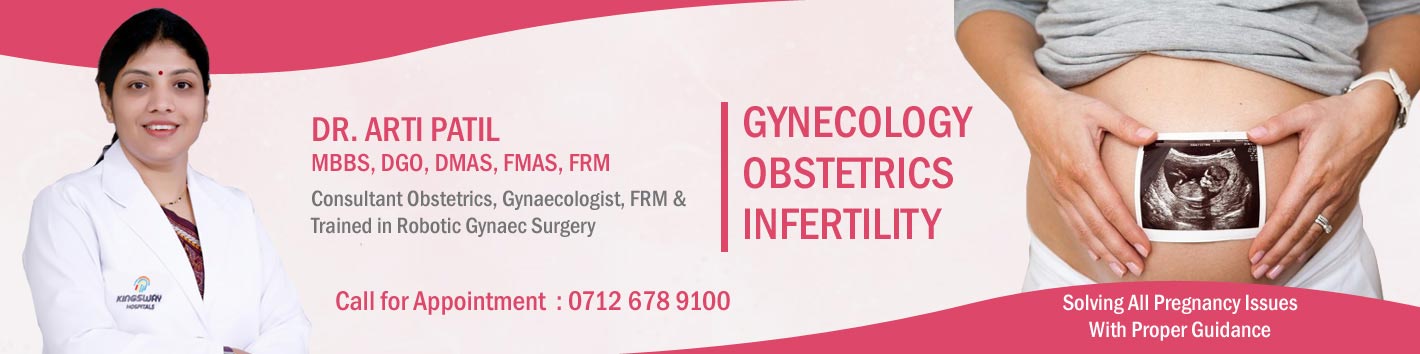
Dr. Arti Patil
MBBS, DGO, DMAS, FMAS, FRM
Consultant Obstetrician & Gynaecologist
FRM (Fellowship in Reproductive Medicine)
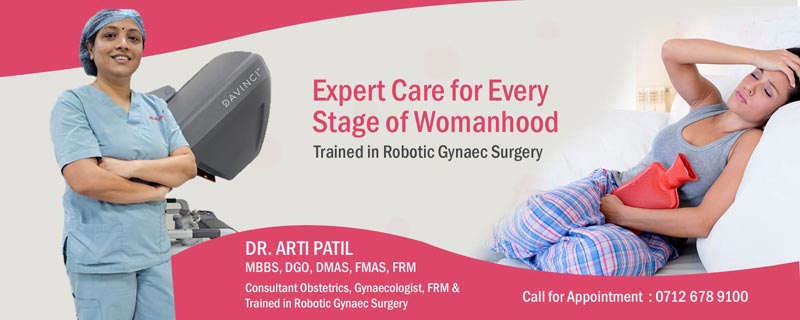
Trained in Robotic Gynaec Surgery
Qualifications & Advanced Training:
- MBBS – Madras Medical College, Chennai (2004)
- DGO – Armed Forces Medical College (AFMC), Pune (2010)
- FMAS (Fellowship in Minimal Access Surgery) – World Laparoscopy Hospital, Gurgaon, NCR, New Delhi (2016)
- DMAS (Diploma in Minimal Access Surgery) – World Laparoscopy Hospital, Gurgaon, NCR, New Delhi (2016)
- FOGSI Recognized Course in Obstetric Ultrasound (2010)
- FOGSI Recognized Course in Infertility (2010)
- CICE France – Certificate Course in Gynaec Endoscopy (2011)
- Training in Operative Hysteroscopy (2016)
- Advanced Life Support in Obstetrics Provider Course (2018)
- Fellowship in Reproductive Medicine (ObGy & IVF) – Dr. Kamini Rao, University of Tumkur, Bengaluru
Practicing at the modern Best Gynecology Hospital, Dr. Patil provides comprehensive fertility evaluations, advanced ovulation protocols, minimally invasive surgeries, and safe obstetric care as a certified Best Robotic Gynecologic Surgeon.
Overcoming female fertility challenges requires courage, patience, and exceptional medical stewardship. With modern reproductive technologies, personalized hormonal protocols, and expert clinical management, motherhood is an attainable and joyous dream.
Prioritize your health and your family’s dream today. Schedule your specialized fertility consultation with a dedicated reproductive care team committed to guiding you safely through every milestone of your magnificent journey toward parenthood.
Frequently Asked Questions (FAQs)
1. What are the most common causes of female infertility?
Common causes include ovulatory disorders such as PCOS, blocked or damaged fallopian tubes, endometriosis, diminished ovarian reserve, and uterine abnormalities like fibroids or polyps.
2. When should a woman consult a fertility specialist for evaluation?
A woman should consult a specialist if she has been unable to achieve pregnancy after 12 months of unprotected intercourse, or after 6 months if she is 35 years of age or older.
3. How is ovarian reserve tested and evaluated?
Ovarian reserve is evaluated through a combination of blood tests (such as AMH and day-3 FSH) and a transvaginal ultrasound to count resting antral follicles.
4. What is ovulation induction and how does it work?
Ovulation induction uses oral medications or injectable hormones to stimulate the ovaries, helping women with irregular cycles or anovulation to mature and release healthy eggs.
5. Can blocked fallopian tubes be treated without major surgery?
Depending on the location and severity of the blockage, minimally invasive laparoscopic or hysteroscopic procedures can often repair or clear fallopian tubes to restore natural fertility.
6. What is the role of hysteroscopy in female infertility treatment?
Hysteroscopy allows doctors to inspect the uterine cavity directly and remove abnormalities like polyps, fibroids, or scar tissue that might prevent successful embryo implantation.
7. Are fertility medications safe for long-term health?
Yes. When prescribed and monitored by fellowship-trained reproductive specialists using individualized protocols, fertility medications have well-established safety profiles.
8. Why choose Dr. Arti Patil for Female Infertility Treatment in Nagpur?
Dr. Arti Patil brings fellowship-trained expertise in Reproductive Medicine (FRM), advanced minimal access and robotic surgery skills, and compassionate, personalized care within a modern hospital environment.
Disclaimer: The information provided in this article is for educational purposes only and should not be substituted for professional medical advice, diagnosis, or treatment. Always seek the advice of your physician regarding any medical condition.