Infertility Treatment in Nagpur: Comprehensive Guide to Assisted Reproductive Technology, IVF, ICSI, Fertility Evaluation, and Advanced Reproductive Care
Infertility Treatment in Nagpur: Comprehensive Guide to Assisted Reproductive Technology, IVF, ICSI, Fertility Evaluation, and Advanced Reproductive Care provides an exhaustive, highly clinical, yet deeply compassionate resource for couples and individuals navigating the complex and emotional journey of building a family. Parenthood is a universal dream, but for millions of couples worldwide, achieving pregnancy naturally encounters biological or physiological hurdles. Infertility—defined clinically as the inability to achieve a successful pregnancy after twelve months of regular, unprotected intercourse (or six months for women aged 35 and older)—is a common medical condition rather than a permanent barrier. Modern reproductive medicine has revolutionized the landscape of fertility care, offering advanced diagnostic evaluations, targeted hormonal treatments, and sophisticated assisted reproductive technologies (ART) such as In Vitro Fertilization (IVF) and Intra-cytoplasmic Sperm Injection (ICSI). Seeking expert clinical guidance and specialized reproductive care under the Best Gynaecologist – Dr. Arti Patil ensures that couples receive meticulous diagnostic assessments, personalized treatment pathways, and unwavering emotional support throughout their restorative journey.
Facing the realization of fertility challenges can naturally evoke deep emotional stress, uncertainty, and vulnerability for couples who yearn to experience the joy of parenthood. However, understanding that modern reproductive science offers high success rates and highly individualized therapeutic protocols brings profound reassurance. Today, Central India has evolved into a premier healthcare destination for advanced Infertility Treatment in Maharashtra, equipped with state-of-the-art embryology laboratories, fellowship-trained reproductive endocrinologists, and comprehensive perinatal units capable of managing complex fertility cases with absolute clinical excellence.
Achieving successful pregnancy outcomes while maintaining the highest standards of clinical safety requires a rare combination of advanced technical infrastructure, rigorous laboratory protocols, and deep empathetic care. Leading maternal health institutions offering specialized fertility services for Infertility Treatment in India adhere strictly to international clinical guidelines established by leading reproductive medicine federations. These rigorous standards ensure that gamete handling, embryo culture, and hormonal stimulation are executed with microscopic precision, enabling fulfilling parenthood for families across the nation.
Understanding Infertility: Medical Definitions, Prevalence, and Etiology
Infertility is a multifaceted medical condition influenced by an equal contribution of female factors, male factors, combined couple factors, and occasionally unexplained etiologies.
Core clinical categories and underlying causes of infertility include:
- Female Factor Infertility (~40% to 50% of cases): Frequently involving ovulatory disorders (such as Polycystic Ovary Syndrome – PCOS), diminished ovarian reserve, tubal blockages resulting from pelvic inflammatory disease or endometriosis, and uterine abnormalities.
- Male Factor Infertility (~40% of cases): Ranging from abnormal sperm parameters (low sperm count, poor motility, or abnormal morphology) to hormonal imbalances, varicocele, or genetic obstructions of the reproductive tract.
- Combined and Unexplained Infertility (~10% to 20% of cases): Situations where both partners exhibit minor subfertility factors that compound together, or where standard diagnostic tests reveal no identifiable organic cause.
- Integration with Routine Care: For foundational reproductive health evaluations leading up to fertility interventions, care is structured under Pregnancy Care and specialized High Risk Pregnancy Care.
Comprehensive Fertility Evaluation and Diagnostic Testing
An accurate, individualized treatment plan begins with a thorough, systematic diagnostic evaluation of both partners to uncover the exact root causes of subfertility.
Key diagnostic investigations conducted during initial fertility workups include:
- Hormonal Profiling: Assessing baseline levels of Follicle-Stimulating Hormone (FSH), Luteinizing Hormone (LH), Thyroid-Stimulating Hormone (TSH), prolactin, and Anti-Mullerian Hormone (AMH) to evaluate ovarian reserve and endocrine function.
- Transvaginal Ultrasound Assessment: Conducting detailed antral follicle counts (AFC) and evaluating uterine architecture and endometrial thickness.
- Hysterosalpingography (HSG) or Sonohysterography: Specialized imaging procedures designed to evaluate uterine cavity contour and confirm fallopian tube patency.
- Comprehensive Semen Analysis: Evaluating male partner sperm concentration, total motility, progressive movement, vitality, and morphological structure according to strict World Health Organization criteria.
Advanced Assisted Reproductive Technologies (ART): IVF, ICSI, and IUI
When conservative treatments or timed intercourse prove insufficient, advanced assisted reproductive technologies offer powerful pathways to achieve successful fertilization and pregnancy.
Core ART treatment modalities include:
- Intrauterine Insemination (IUI): A frontline fertility treatment where washed, highly concentrated sperm are placed directly into the uterine cavity around the time of ovulation, bypassing cervical mucus barriers.
- In Vitro Fertilization (IVF): A comprehensive procedure where ovarian stimulation is performed, mature eggs are retrieved surgically, and fertilization with sperm takes place in a controlled laboratory incubator, followed by the transfer of a healthy embryo into the uterus.
- Intracytoplasmic Sperm Injection (ICSI): An advanced micro-manipulation technique performed during IVF where a single, highly qualified sperm is injected directly into the cytoplasm of a mature egg, revolutionizing treatment for severe male factor infertility.
- Surgical and Endoscopic Interventions: For correcting anatomical obstructions such as tubal adhesions, uterine septum, or severe endometriosis prior to ART, care is managed under Laparoscopic Gynecological Surgery and hysteroscopic procedures. For subsequent maternity care, complete pathways are structured under Comprehensive Delivery Services.
Specialized Fertility Protocols: Ovulation Induction and Lifestyle Optimization
Not every fertility journey requires high-tech laboratory procedures; many couples achieve successful pregnancy through targeted hormonal protocols and lifestyle modifications.
Key non-surgical and preparatory strategies include:
- Ovulation Induction (OI): Administering oral medications (such as letrozole or clomiphene citrate) or gonadotropin injections to stimulate the development and release of mature eggs in women with ovulatory dysfunction like PCOS.
- Metabolic and Nutritional Optimization: Managing insulin resistance, maintaining a healthy body mass index (BMI), adopting anti-inflammatory nutritional habits, and eliminating environmental toxins that impair gamete quality.
- Endocrine Management: Treating underlying thyroid disorders or hyperprolactinemia that can disrupt normal menstrual cycles and inhibit successful implantation.
Emotional Resilience, Compassionate Counseling, and Patient Support
Navigating fertility treatments involves navigating profound emotional highs and lows, making compassionate psychological support an essential component of comprehensive reproductive care.
Perinatal and emotional support strategies include:
- Transparent Clinical Communication: Ensuring patients fully understand every step of their diagnostic and treatment timeline, empowering them to make informed choices without anxiety.
- Stress Reduction and Counseling: Providing dedicated emotional guidance to help couples manage the psychological toll of fertility cycles, fostering resilience and hope.
- Holistic Care Integration: Combining cutting-edge medical science with deep human empathy to ensure patients feel valued, respected, and completely supported at every milestone.
Meet your Expert: Dr. Arti Patil
When seeking top-tier clinical expertise, fellowship-trained proficiency in reproductive medicine, and deeply compassionate fertility care, Dr. Arti Patil is widely recognized as a preeminent specialist for managing Infertility Treatment in Nagpur. With extensive fellowship training in reproductive medicine, minimal access surgery, and obstetric ultrasound, Dr. Patil combines rigorous scientific precision with a warm, reassuring bedside manner that puts struggling couples completely at ease.
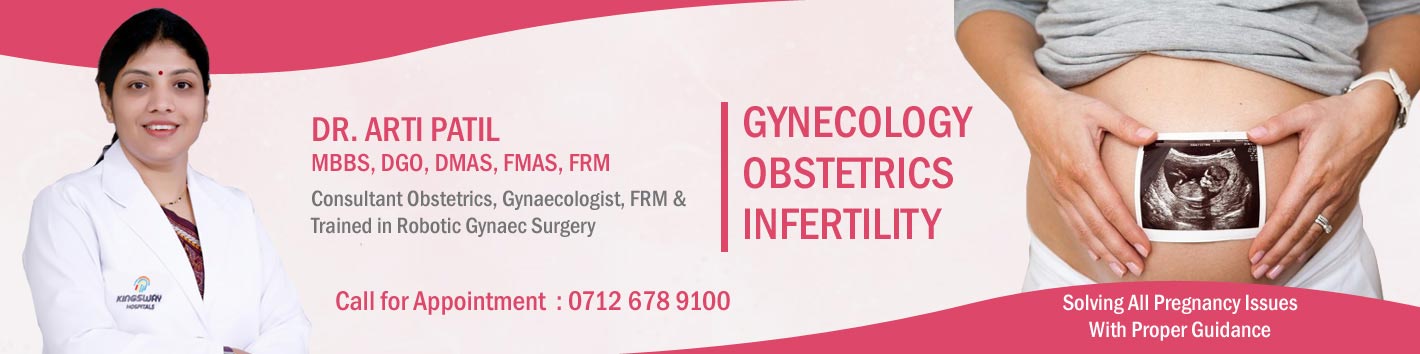
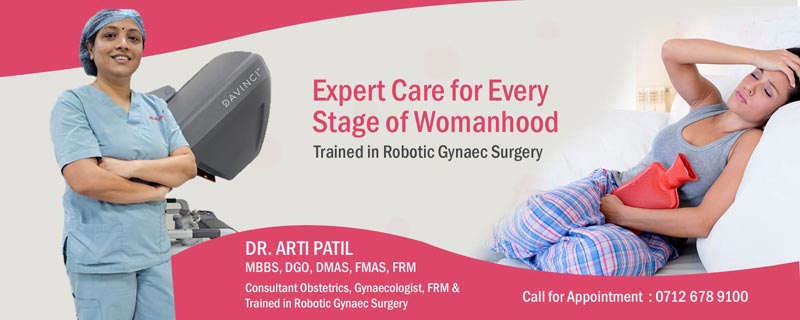
Dr. Arti Patil
MBBS, DGO, DMAS, FMAS, FRM
Consultant Obstetrician & Gynaecologist
FRM (Fellowship in Reproductive Medicine)
Trained in Robotic Gynaec Surgery
Qualifications & Advanced Training:
- MBBS – Madras Medical College, Chennai (2004)
- DGO – Armed Forces Medical College (AFMC), Pune (2010)
- FMAS (Fellowship in Minimal Access Surgery) – World Laparoscopy Hospital, Gurgaon, NCR, New Delhi (2016)
- DMAS (Diploma in Minimal Access Surgery) – World Laparoscopy Hospital, Gurgaon, NCR, New Delhi (2016)
- FOGSI Recognized Course in Obstetric Ultrasound (2010)
- FOGSI Recognized Course in Infertility (2010)
- CICE France – Certificate Course in Gynaec Endoscopy (2011)
- Training in Operative Hysteroscopy (2016)
- Advanced Life Support in Obstetrics Provider Course (2018)
- Fellowship in Reproductive Medicine (ObGy & IVF) – Dr. Kamini Rao, University of Tumkur, Bengaluru
Practicing at the modern Best Gynecology Hospital, Dr. Patil provides comprehensive fertility evaluations, advanced ART protocols, and safe obstetric care as a certified Best Robotic Gynecologic Surgeon.
Overcoming fertility challenges requires courage, patience, and exceptional medical stewardship. With modern assisted reproductive technologies, personalized hormonal protocols, and expert clinical management, parenthood is an attainable dream for the vast majority of couples.
Prioritize your future and your family’s dream today. Schedule your specialized fertility consultation with a dedicated reproductive care team committed to guiding you safely through every milestone of your magnificent journey toward parenthood.
Frequently Asked Questions (FAQs)
1. When should a couple consult a fertility specialist for infertility evaluation?
Couples should consult a specialist if they have been unable to achieve pregnancy after 12 months of unprotected intercourse, or after 6 months if the female partner is 35 years of age or older.
2. What are the most common causes of female infertility?
Common causes include ovulatory disorders like PCOS, blocked or damaged fallopian tubes, endometriosis, diminished ovarian reserve, and uterine or cervical abnormalities.
3. How is male factor infertility diagnosed and evaluated?
Male fertility is primarily evaluated through a comprehensive semen analysis assessing sperm count, motility, morphology, and vitality, alongside hormonal assays and physical examinations if needed.
4. What is the difference between IUI and IVF treatments?
IUI (Intrauterine Insemination) places washed sperm directly into the uterus during ovulation, whereas IVF (In Vitro Fertilization) fertilizes eggs and sperm together in a laboratory incubator before transferring the resulting embryo.
5. What is ICSI and when is it recommended?
ICSI (Intracytoplasmic Sperm Injection) is an advanced IVF technique where a single healthy sperm is injected directly into an egg. It is recommended for severe male factor infertility or previous fertilization failure.
6. Can lifestyle factors significantly impact fertility health?
Yes. Smoking, excessive alcohol consumption, obesity, high stress levels, poor nutrition, and exposure to environmental toxins can negatively impact both egg and sperm quality.
7. Are fertility medications and treatments safe?
Yes. When prescribed and monitored by fellowship-trained reproductive specialists using individualized protocols, fertility medications and ART procedures have established safety profiles.
8. Why choose Dr. Arti Patil for Infertility Treatment in Nagpur?
Dr. Arti Patil brings fellowship-trained expertise in Reproductive Medicine (FRM) from premier institutions, advanced minimal access surgery skills, and compassionate, personalized fertility care within a modern hospital environment.
Disclaimer: The information provided in this article is for educational purposes only and should not be substituted for professional medical advice, diagnosis, or treatment. Always seek the advice of your physician regarding any medical condition.